Top 10 Fastest Cars in the World

Bugatti Veyron Super Sport: 267.856 mph (431.072 km/h)- According to Guinness worlds, Bugatti Veyron Super Sport is the current world’s fastest production car

Top 10 Fastest Animals in the World

Lion (50 mph/ 80 kmph) - Lion is another predator that marches the earth with speed. Although the cat is slower than cheetah

Top 10 Most Expensive Houses in the World

Draculas Castle, Romania: $ 135 million - This castle used to be a house of Romanian royal house. Some call it bran castle and it has stand on bran since 1212. It is the oldest house in the list

Showing posts with label Universe. Show all posts

Saturday, June 12, 2010

Space Exploration


Space Exploration


Three men were the first scientists to conceive pragmatically of spaceflight: the Russian Konstantin Tsiolkovsky, the American Robert Goddard, and the German Hermann Oberth. By the end of World War II, the German development of rocket propulsion for aircraft and guided missiles (notably the V-2) had reached a high level. After the war the US and its allies fell heir to the technical knowledge of rocket power developed by the Germans. The technical director of the German missile effort, Wernher von Braun, and some 150 of his top aides surrendered to US troops. Most immigrated to the US, where they assembled and launched V-2 missiles that had been captured and shipped there. The USSR carried out an unpublicized but extensive and likely similar program; Britain and France conducted smaller programs.

In both the US and the USSR the development of military missile technology was essential to the achievement of satellite flight. Preparations for the International Geophysical Year (IGY, 1957–58) stimulated discussion of the possibility of launching artificial Earth satellites for scientific investigations. Both the US and the USSR became determined to prepare scientific satellites for launching during the IGY. While the US was still developing a space launch vehicle, the USSR startled the world by placing Sputnik 1 in orbit on 4 Oct 1957. This was followed a month later by Sputnik 2, which carried a live dog. The failure by the US to launch its small payload on 6 Dec 1957 heightened that country’s political discomfiture in view of its supposed advanced status in science. Following debates on the necessity of achieving parity, the US government established the National Aeronautics and Space Administration (NASA) in 1958. Since that time, NASA has conducted virtually all major aspects of the US space program.

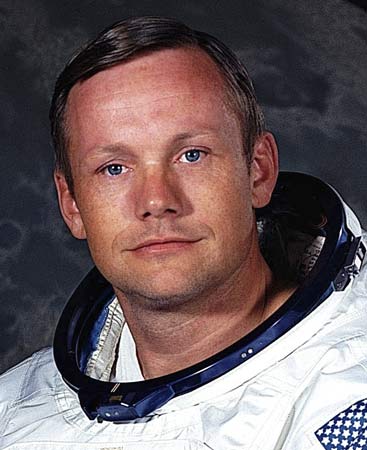
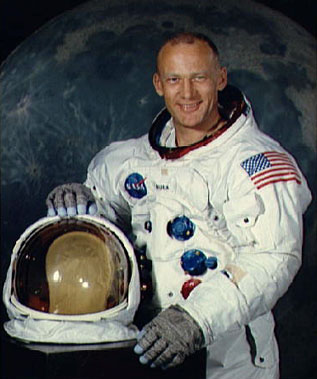
The first successful US satellite, Explorer 1, was launched about four months after Sputnik 1. During the next decades the two countries participated in a space race, conducting thousands of successful launches of spacecraft of all varieties including scientific- research, communications, meteorological, remote- sensing, military-reconnaissance, early-warning,and navigation satellites, lunar and planetary probes, and manned craft. The USSR launched the first human, (1) Yury Gagarin, into orbit around Earth on 12 Apr 1961. On 20 July 1969, the US landed two men, (2) Neil Armstrong and (3) Edwin (“Buzz”) Aldrin, on the surface of the Moon as part of the Apollo 11 mission. On 12 Apr 1981, the 20th anniversary of manned space flight, the US launched the first reusable manned space transportation system, the space shuttle. Since
the 1960s various European countries, Japan, India, China, and other countries have formed their own agencies for space exploration and development. The European Space Agency (ESA) consists of 18 member states. Private corporations, too, offer space launches for communications and remote-sensing satellites.

In the post-Apollo decades, while the US focused much of its manned space program on the shuttle, the USSR concentrated on launching a series of increasingly sophisticated Earth-orbiting space stations, beginning with the world’s first in 1971. Station crews, who were carried up in two- and three-person spacecraft, carried out mostly scientific missions while gaining experience in living and working for long periods in the space environment. After the USSR was dissolved in 1991, its space program was continued by Russia on a much smaller scale owing to economic constraints. The US launched a space station in 1973 using surplus Apollo hardware and conducted shuttle missions to a Russian station, Mir, in the 1990s. In 1998, at the head of a 16-country consortium and with Russia as a major partner, the US began in-orbit assembly of the International Space Station (ISS), using the shuttle and Russian expendable launch vehicles to ferry the facility’s modular components and crews into space. In addition to manned and unmanned lunar exploration, space exploration programs have included deep-space robotic missions to the planets, their moons, and smaller bodies such as comets and asteroids. Also important has been the development of unmanned spacebased astronomical observatories, which allow observation of near and distant cosmic objects above the filtering and distorting effects of Earth’s atmosphere.
Solar System Superlatives

Solar System Superlatives


Largest planet:
Jupiter (142,984 km [88,846 mi] diameter); all of the other planets in the solar system could fit inside Jupiter.

Largest moon: Jupiter’s moon Ganymede (5,268 km [3,273 mi] diameter).

Smallest planet: Mercury (4,879 km [3,032 mi] diameter).

Smallest moons: Saturn and Jupiter both have numerous satellites that are smaller than 10 km (6 mi) in diameter.

Planet closest to the Sun: Mercury (average distance from the Sun 58 million km [36 million mi]).

Planet farthest from the Sun: Neptune (average distance from the Sun 4.50 billion km [2.79 billion mi]); Pluto, demoted to the status of dwarf planet in 2006, was the farthest planet from the Sun for all but 20 years of its 248-year orbital period.

Planet with the most eccentric (least circular) orbit: Mercury (eccentricity of 0.206).

Moon with the most eccentric orbit: Neptune’s moon Nereid (eccentricity of 0.75).

Planet with the least eccentric orbit: Venus (eccentricity of 0.007).

Moon with the least eccentric orbit: Saturn’s moon Tethys (eccentricity of 0.0001).

Planet most tilted on its axis: Uranus (axial tilt of 98° from its orbital plane).

Planet with the most moons: Jupiter (at least 62).

Planets with the fewest moons: Mercury and Venus (none).

Planet with the longest day: Venus (1 day on Venus equals 243 Earth days).

Planet with the shortest day: Jupiter (1 day on Jupiter equals 9.9 Earth hours).

Planet with the longest year: Neptune (1 year on Neptune equals 165 Earth years).

Planet with the shortest year: Mercury (1 year on Mercury equals 88 Earth days).

Fastest orbiting planet: Mercury (47.9 km/sec [29.7 mi/sec] mean orbital velocity).

Slowest orbiting planet: Neptune (5.48 km/sec [3.40 mi/sec] mean orbital velocity).

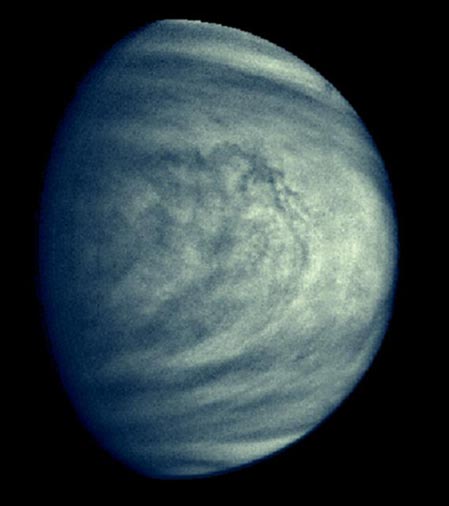
Hottest planet: Venus (464 °C [867 °F] average temperature); although Mercury is closer to the Sun, Venus is hotter because Mercury has no atmosphere, whereas the atmosphere of Venus traps heat via a strong greenhouse effect.

Coldest planet: Neptune (−220 °C [−364 °F] average temperature).

Brightest visible star in the night sky: Sirius (apparent visual magnitude −1.46).

Brightest planet in the night sky: Venus (apparent visual magnitude −4.5 to −3.77).

Densest planet: Earth (density of 5,515 kg/m3).

Least dense planet:
Saturn (density of 687 kg/m3); Saturn in theory would float in water.

Planet with strongest gravity: Jupiter (more than twice the gravitational force of Earth at an altitude at which one bar of atmospheric pressure is exerted).

Planet with weakest gravity: Mars (slightly more than one-third the gravitational force of Earth).

Planet with the largest mountain: Mars (Olympus Mons, an extinct volcano, stands some 21 km [13 mi] above the planet’s mean radius and 540 km [335 mi] across).

Planet with the deepest valley: Mars (Valles Marineris, a system of canyons, is some 4,000 km [2,500 mi] long and from about 2 to 9 km [1 to 5.6 mi] deep).

Largest known impact crater: Valhalla, a crater on Jupiter’s moon Callisto, has a bright central area that is about 600 km (370 mi) across, with concentric ridges extending about 1,500 km (900 mi) from the center. (The largest crater on Earth believed to be of impact origin is the Vredefort ring structure in South Africa, which is about 300 km [190 mi] across.)

Friday, June 11, 2010

Characteristics of Celestial Bodies

Characteristics of Celestial Bodies


Mean orbital velocity indicates the average speed at which a planet orbits the Sun unless otherwise specified. Inclination of orbit to ecliptic indicates the angle of tilt between a planet’s orbit and the plane of Earth’s orbit (essentially the plane of the solar system). Orbital period indicates the planet’s sidereal year (in Earth days except where noted). Rotation period indicates the planet’s sidereal day (in Earth days except where noted). Inclination of equator to orbit indicates the angle of tilt between a planet’s orbit and its equator. Gravitational acceleration is a measure of the body’s gravitational pull on other objects. Escape velocity is the speed needed at the surface to escape the planet’s gravitational pull. Eccentricity of orbit is a measure of the circularity or elongation of an orbit; 0 indicates circular orbits, and closer to 1 more elliptical ones.


Sun
diameter (at equator): 1.39 million km (863,705 mi)
mass (in 1020 kg): 19.8 billion
density (mass/volume, in kg/m3): 1,408
mean orbital velocity: the Sun orbits the Milky Way’s
center at around 220 km/sec (136.7 mi/sec)
orbital period: the Sun takes approximately 250 millionEarth years to complete its orbit around the Milky Way’s center
rotation period: 25–36 Earth days
gravitational acceleration: 275 m/sec2 (902.2 ft/sec2)
escape velocity: 618.02 km/sec (384.01 mi/sec)
mean temperature at visible surface: 5,527 °C (9,980 °F)
probes and space missions: US—Pioneer 5–9,
launched 1960–68; Skylab, 1973; Genesis,
2001; Japan—Yohkoh, 1991; US/European Space
Agency (ESA)—Ulysses, 1990; SOHO, 1995.


Mercury
average distance from the Sun: 58 million km (36
million mi)
diameter (at equator): 4,879 km (3,032 mi)
mass (in 1020 kg): 3,300
density (mass/volume, in kg/m3): 5,427
eccentricity of orbit: 0.206
mean orbital velocity: 47.9 km/sec (29.7 mi/sec)
inclination of orbit to ecliptic: 7.0°
orbital period: 88 Earth days
rotation period: 58.6 Earth days
inclination of equator to orbit: probably 0°
gravitational acceleration: 3.7 m/sec2 (12.1 ft/sec2)
escape velocity: 4.3 km/sec (2.7 mi/sec)
mean temperature at surface†: 167 °C (333 °F)
satellites: none known
probes and space missions: US—Mariner 10, 1973;
Messenger, 2004.


Venus
average distance from the Sun: 108.2 million km
(67.2 million mi)
diameter (at equator): 12,104 km (7,521 mi)
mass (in 1020 kg): 48,700
density (mass/volume, in kg/m3): 5,243
eccentricity of orbit: 0.007
mean orbital velocity: 35.0 km/sec (21.8 mi/sec)
inclination of orbit to ecliptic: 3.4°
orbital period: 224.7 Earth days
rotation period: 243.0 Earth days (retrograde)
inclination of equator to orbit: 177.4°
gravitational acceleration: 8.9 m/sec2 (29.1 ft/sec2)
escape velocity: 10.4 km/sec (6.4 mi/sec)
mean temperature at surface†: 464 °C (867 °F)
satellites: none known
probes and space missions: USSR—Venera 1–16,
1961–83; Vega 1 and 2, 1984; US—Mariner 2, 5,
and 10, 1962, 1967, and 1973; Pioneer Venus Orbiter
and Pioneer Venus Multiprobe, 1978; Galileo,
1989; Magellan, 1989; ESA—Venus Express, 2005.


Earth
average distance from the Sun: 149.6 million km (93
million mi)
diameter (at equator): 12,756 km (7,926 mi)
mass (in 1020 kg): 59,700
density (mass/volume, in kg/m3): 5,515
eccentricity of orbit: 0.017
mean orbital velocity: 29.8 km/sec (18.5 mi/sec)
inclination of orbit to ecliptic: 0.00°
orbital period: 365.25 days
rotation period: 23 hours, 56 minutes, and 4
seconds of mean solar time
inclination of equator to orbit: 23.5°
gravitational acceleration: 9.8 m/sec2 (32.1 ft/sec2)
escape velocity: 11.2 km/sec (7.0 mi/sec)
mean temperature at surface†: 15 °C (59 °F)
satellites: 1 known—the Moon.


Moon (of Earth)
average distance from Earth: 384,401 km
(238,855.7 mi)
diameter (at equator): 3,475 km (2,159 mi)
mass (in 1020 kg): 730
density (mass/volume, in kg/m3): 3,340
eccentricity of orbit: orbital eccentricity of Moon
around Earth is 0.055
mean orbital velocity: the Moon orbits Earth at 1.0
km/sec (0.64 mi/sec)
inclination of orbit to ecliptic: 5.1°
orbital period: the Moon revolves around Earth in
27.32 Earth days
rotation period: the Moon rotates on its axis every
27.32 Earth days (synchronous with orbital period)
inclination of equator to orbit: 6.7°
gravitational acceleration: 1.6 m/sec2 (5.3 ft/sec2)
escape velocity: 2.4 km/sec (1.5 mi/sec)
mean temperature at surface†: daytime: 107 °C
(224.6 °F); nighttime: −153 °C (−243.4 °F)
probes and space missions: USSR, US, ESA, Japan—
collectively about 70 missions since 1959, including
9 manned missions by the US. On 20 Jul 1969
humans first set foot on the Moon, from NASA’s
Apollo 11.


Mars
average distance from the Sun: 227.9 million km
(141.6 million mi)
diameter (at equator): 6,794 km (4,222 mi)
mass (in 1020 kg): 6,420
density (mass/volume, in kg/m3): 3,933
eccentricity of orbit: 0.094
mean orbital velocity: 24.1 km/sec (15 mi/sec)
inclination of orbit to ecliptic: 1.9°
orbital period: 687 Earth days (1.88 Earth years)
rotation period: 24.6 Earth hours
inclination of equator to orbit: 24.9°
gravitational acceleration: 3.7 m/sec2 (12.1 ft/sec2)
escape velocity: 5.0 km/sec (3.1 mi/sec)
mean temperature at surface†: −65 °C (−85 °F)
satellites: 2 known—Phobos and Deimos
probes and space missions: US—Mariner 4, 6, 7, and
9, 1964–71; Viking 1 and 2, 1975; Mars Global
Surveyor, 1996; Mars Pathfinder, 1996; 2001
Mars Odyssey, 2001; Mars Exploration Rovers,
2003; Mars Reconnaissance Orbiter, 2005; USSR—
Mars 2–7, 1971–73; Phobos 1 and 2, 1988; ESA—
Mars Express, 2003; Phoenix, 2007.


Jupiter
average distance from the Sun: 778.6 million km
(483.8 million mi)
diameter (at equator): 142,984 km (88,846 mi)
mass (in 1020 kg): 18.99 million
density (mass/volume, in kg/m3): 1,326
eccentricity of orbit: 0.049
mean orbital velocity: 13.1 km/sec (8.1 mi/sec)
inclination of orbit to ecliptic: 1.3°
orbital period: 11.86 Earth years
rotation period: 9.9 Earth hours
inclination of equator to orbit: 3.1°
gravitational acceleration: 23.1 m/sec2 (75.9 ft/sec2)
escape velocity: 59.5 km/sec (37.0 mi/sec)
mean temperature at surface†: −110 °C (−166 °F)
satellites: at least 62 moons—including Callisto,
Ganymede, Europa, and Io—plus rings
probes and space missions: US—Pioneer 10 and
11, 1972–73; Voyager 1 and 2, 1977; Galileo,
1989; Ulysses, 1990; US/ESA—Cassini-Huygens,
1997.


Saturn
average distance from the Sun: 1.433 billion km
(890.8 million mi)
diameter (at equator): 120,536 km (74,897 mi)
mass (in 1020 kg): 5.68 million
density (mass/volume, in kg/m3): 687
eccentricity of orbit: 0.057
mean orbital velocity: 9.7 km/sec (6 mi/sec)
inclination of orbit to ecliptic: 2.5°
orbital period: 29.43 Earth years
rotation period: 10.66 Earth hours
inclination of equator to orbit: 26.7°
gravitational acceleration: 9.0 m/sec2 (29.4 ft/sec2)
escape velocity: 35.5 km/sec (22.1 mi/sec)
mean temperature at surface†: −140 °C (−220 °F)
satellites: at least 61 moons—including Titan—plus
rings
probes and space missions: US—Pioneer 11, 1973;
Voyager 1 and 2, 1977; US/ESA—Cassini/Huygens,
1997.


Uranus
average distance from the Sun: 2.872 billion km
(1.784 billion miles)
diameter (at equator): 51,118 km (31,763 mi)
mass (in 1020 kg): 868,000
density (mass/volume, in kg/m3): 1,270
eccentricity of orbit: 0.046
mean orbital velocity: 6.8 km/sec (4.2 mi/sec)
inclination of orbit to ecliptic: 0.8°
orbital period: 84.01 Earth years
rotation period: 17.2 Earth hours (retrograde)
inclination of equator to orbit: 97.8°
gravitational acceleration: 8.7 m/sec2 (28.5 ft/sec2)
escape velocity: 21.3 km/sec ( 13.2 mi/sec)
mean temperature at surface†: −195 °C (−320 °F)
satellites: at least 27 moons, plus rings
probes and space missions: US—Voyager 2, 1977.


Neptune
average distance from the Sun: 4.495 billion km
(2.793 billion mi)
diameter (at equator): 49,528 km (30,775 mi)
mass (in 1020 kg): 1.02 million
density (mass/volume, in kg/m3): 1,638
eccentricity of orbit: 0.009
mean orbital velocity: 5.48 km/sec (3.40 mi/sec)
inclination of orbit to ecliptic: 1.8°
orbital period: 164.79 Earth years
rotation period: 16.1 Earth hours
inclination of equator to orbit: 28.3°
gravitational acceleration: 11.0 m/sec2 (36.0
ft/sec2)
escape velocity: 23.5 km/sec (14.6 mi/sec)
mean temperature at surface†: −200 °C (−330 °F)
satellites: at least 13 moons, plus rings
probes and space missions: US—Voyager 2, 1977.


Definitions of Astronomical Positions


Definitions of Astronomical Positions


A conjunction is an apparent meeting or passing of two or more celestial bodies. For example, the Moon is in conjunction with the Sun at the phase of new Moon, when it moves between the Earth and Sun and the side turned toward the Earth is dark. Inferior planets—those with orbits smaller than the Earth’s (namely, Venus and Mercury)—have two kinds of conjunctions with the Sun. An inferior conjunction occurs when the planet passes approximately between Earth and Sun; if it passes exactly between them, moving across the Sun’s face as seen from Earth, it is said to be in transit (see below). A superior conjunction occurs when Earth and the other planet are on opposite sides of the Sun, but all three bodies are again nearly in a straight line. Superior planets, those having orbits larger than the earth’s can have only superior conjunctions with the Sun.


When celestial bodies appear in opposite directions in the sky they are said to be in opposition. The Moon, when full, is said to be in opposition to the Sun (the Earth is then approximately between them). A superior planet (one with an orbit farther from the Sun than Earth’s) is in opposition when Earth passes between it and the Sun. The opposition of a planet is a good time to observe it, because the planet is then at its nearest point to the Earth and in its full phase. The inferior planets, Venus and Mercury, can never be in opposition to the Sun.


When a celestial body as seen from the Earth makes a right angle with the direction of the Sun it is said to be in quadrature. The Moon at first or last quarter is said to be at east or west quadrature, respectively. A superior planet is at west quadrature when its position is 90° west of the Sun.


The east–west coordinate by which the position of a celestial body is ordinarily measured is known as the right ascension. Right ascension in combination with declination defines the position of a celestial object. Declination is the angular distance of a body north or south of the celestial equator. North declination is considered positive and south, negative. Thus, +90° declination marks the north celestial pole, 0° the celestial equator, and −90° the south celestial pole. The symbol for right ascension is the Greek letter α (alpha) and for declination
the lowercase Greek letter Δ (delta).

The angular distance in celestial longitude separating the Moon or a planet from the Sun is known as elongation. The greatest elongation possible for the two inferior planets is about 48° in the case of Venus and about 28° in that of Mercury. Elongation may also refer to the angular distance of any celestial body from another around which it revolves or from a particular point in the sky; e.g., the extreme east or west position of a star with reference to the north celestial pole.


The point at which a planet is closest to the Sun is called the perihelion, and the most distant point in that planet’s orbit is the aphelion. The term helion refers specifically to the Sun as the primary body about which the planet is orbiting.


Occultation refers to the obscuring of the light of an astronomical body, most commonly a star, by another astronomical body, such as a planet or a satellite. Hence, a solar eclipse is the occultation of the Sun by the Moon. From occultations of stars by planets, asteroids, and satellites, astronomers are able to determine the precise sizes and shapes of the latter bodies in addition to the temperatures of planetary atmospheres. For example, astronomers unexpectedly discovered the rings of Uranus during a stellar occultation on 10 Mar 1977.


A complete or partial obscuring of a celestial body by another is an eclipse; these occur when three celestial objects become aligned. The Sun is eclipsed when the Moon comes between it and the Earth; the Moon is eclipsed when it moves into the shadow of the Earth cast by the Sun. Eclipses of natural or artificial satellites of a planet occur as the satellites move into the planet’s shadow. When the apparent size of the eclipsed body is much smaller than that of the eclipsing body, the phenomenon is known as an occultation (see above). Examples are the disappearance of a star, nebula, or planet behind the Moon, or the vanishing of a natural satellite or space probe behind some body of the solar system. A transit (see above) occurs when, as viewed from the Earth, a relatively small body passes across the disk of a larger body, usually the Sun or a planet, eclipsing only a very small area: Mercury and Venus periodically transit the Sun, and a satellite may transit its planet. When an object orbiting the Earth is at the point in its orbit that is the greatest distance from the center of the Earth, this point is known as apogee; the term is also used to describe the point farthest from a planet or a satellite (as the Moon) reached by an object orbiting it. Perigee is the opposite of apogee.


The difference in direction of a celestial object as seen by an observer from two widely separated points is termed parallax. The measurement of parallax is used directly to find the distance of the body from the Earth (geocentric parallax) and from the Sun (heliocentric parallax). The two positions of the observer and the position of the object form a triangle; if the base line between the two observing points is known and the direction of the object as seen from each has been measured, the apex angle (the parallax) and the distance of the object from the observer can be determined.


An hour angle is the angle between an observer’s meridian (a great circle passing over his head and through the celestial poles) and the hour circle (any other great circle passing through the poles) on which some celestial body lies. This angle, when expressed in hours and minutes, is the time elapsed since the celestial body’s last transit of the observer’s meridian. The hour angle can also be expressed in degrees, 15° of arc being equal to one hour.